new-solar-sunset

Consultation

Introduction

The project is still at an early stage and we are currently carrying out technical work and environmental surveys. We will be holding community consultation after the summer holidays. Please keep an eye on this section of the website where we will publish more details, including consultation dates and how you can be involved in the consultation process.

Why do we need the solar farm?

The UK is transitioning to zero and low carbon sources of power. All coal-fired power stations have to close by 2025, meaning the amount of energy generated from renewable sources needs to increase. The UK’s climate change ambitions are amongst the highest in Europe and the aim to achieve net-zero carbon emissions by 2050 is set in law.

By 2050, National Grid expects the UK to be using double the amount of electricity than we do today. For example, the growth in electric vehicle ownership has grown thirty-fold and is set to rise with the abolition of new diesel and petrol cars by 2035.

Currently the UK’s electricity price is among the highest in Europe, meaning that we need to find ways of generating more affordable, renewable and clean electricity. Energy security for the country is also of paramount importance.

We anticipate that Flaxlands Solar Farm will be able to supply enough energy to power 25,000 homes each year, and the clean energy generated will save on average 21,000 tonnes of CO2 per year. That is a saving of just over 800,000 tonnes of CO2 over the solar farm’s life (40 years).
What does the project consist of?

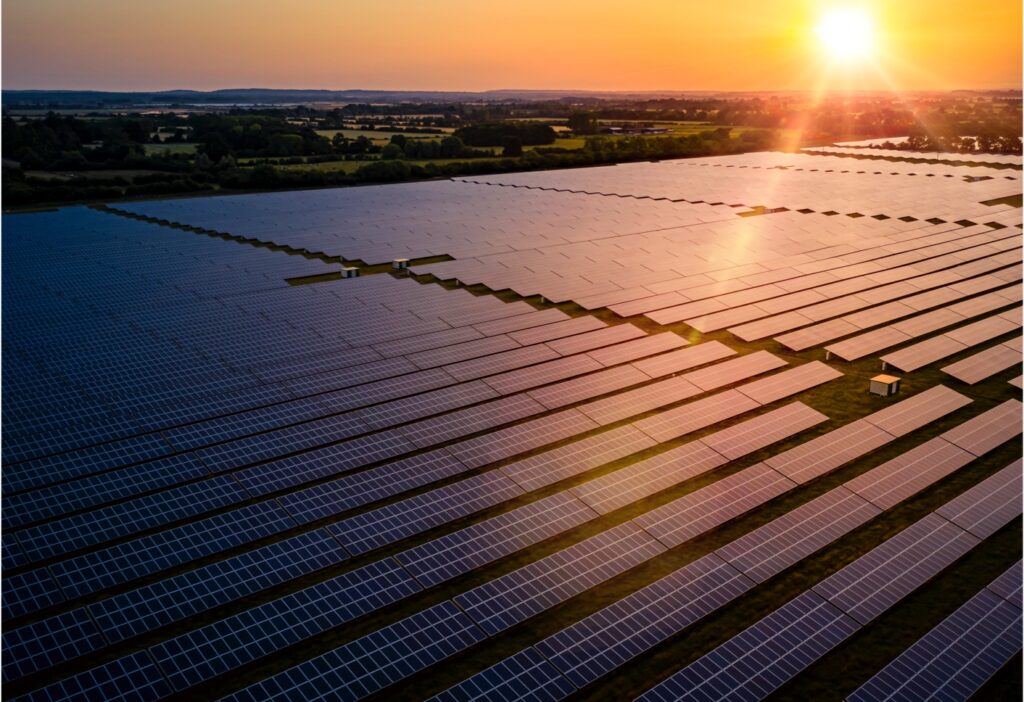
Our proposal includes a solar farm at Flaxlands Farm and Battery Energy Storage System with an expected generating capacity of up to 49.9 megawatts (MW).

We are still finalising our detailed design, but the main elements of the solar farm will consist of:

  • Fixed-tilt solar photovoltaic panels This means that they are in a fixed position and do not move during the day.
  • An on-site substation and site facility, which includes a control room and components storage.
  • Battery Energy Storage System (BESS) which includes commercial-scale batteries and transformers.

We are still carrying out detailed technical and environmental work to determine a design for the solar farm. We will provide more information on the site location and its layout at our consultation later this year.

How does the solar farm work?

Solar panels are made of photovoltaic cells (which is why generating electricity with solar panels is also called solar PV) that convert the sun’s energy into electricity.

Photovoltaic cells are sandwiched between layers of semi-conducting materials such as silicone. Each layer has different electronic properties that energise when hit by photons from sunlight, creating an electric field. This is known as the photoelectric effect, and this creates the electrical current.

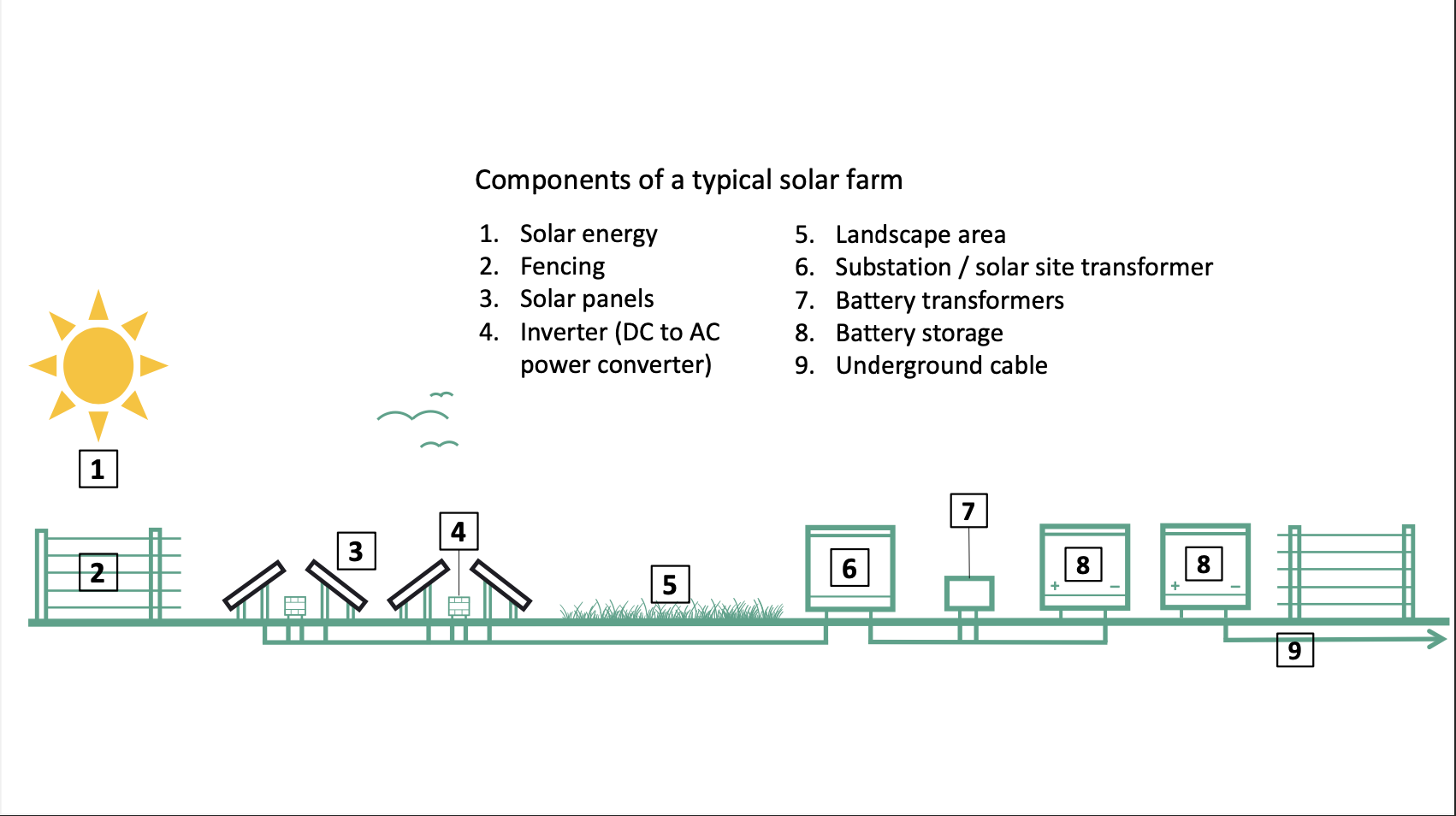
Solar panels generate a Direct Current of electricity. This is then passed through an inverter to convert it into an Alternating Current, which can then be fed into the National Grid, or directly to large local power users.

The site will also have a Battery Energy Storage System (BESS). BESS are devices that enable solar energy to be stored and then released when the power is needed most. The battery storage at Camp Farm Solar would facilitate the storage of solar energy and supply power even when the sun doesn’t shine. The battery storage uses computerised control systems to release energy during times of peak demand, helping to keep electricity flowing.

Plan 3 shows the key components of this type of solar farm.

Plan 3: The key components of the solar farm.

How will the solar panels be screened?

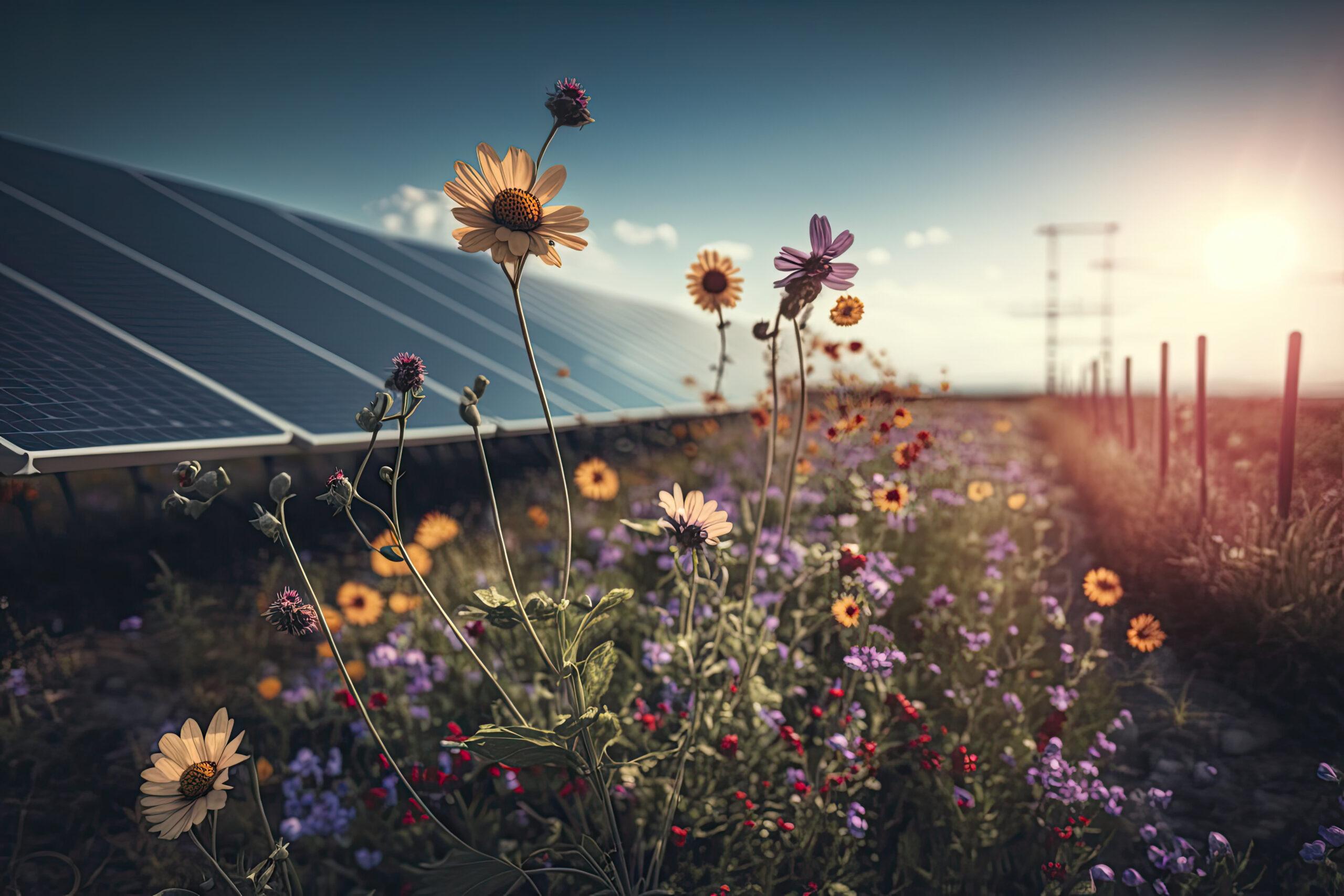
Existing hedgerows and trees will be maintained, and where required new hedgerow will be planted to screen the development from external views and also provide wildlife benefits. We will be developing a landscaping plan informed by a Landscape and Visual Assessment, which will be submitted with our planning application.

How will the local community benefit?

We are looking at ways to help ensure the local community benefits from the development of the solar farm. This could include:

  • A Community Benefit Fund to support local projects, initiatives, or community cooperative electricity
  • Creating opportunities for local businesses in the supply chain

We will be asking for your views on what could be delivered at our consultation.

How long will the project take to develop?

We are currently undertaking surveys and assessments, which will inform our proposal alongside the outputs from future consultation due to take place later this year.

Following this, we aim to submit a planning application to Wiltshire Council later this year. Once the planning application is submitted, Wiltshire Council will host a statutory consultation, where you will be able to comment further, directly to the council. At this point, we will also share an update with the local community on how feedback has influenced our proposal.